Seoul National University Designs Air Mobility Blades, Digital Twin Technologies using VABS
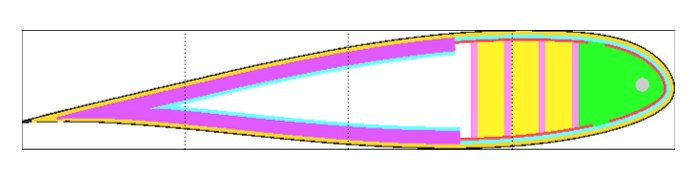
University conducts research to establish design methodologies applicable to urban air mobility (UAM) systems and to develop digital twin technologies that can be utilized in the aerospace industry
West Lafayette, Indiana (USA) – AnalySwift, LLC, a provider of efficient high-fidelity modeling software for composites, announced today that Seoul National University (SNU) is making advances applicable to the aerospace industry as part of its Academic Partner Program (APP). Specifically, SNU has been using AnalySwift’s VABS simulation software for designing rotor blades for UAM and developing digital twin technologies. The work is part of the Active Aeroelasticity and Rotorcraft Laboratory (AARL) in the Department of Aerospace Engineering at Seoul National University and the Seoul National University Urban Air Mobility Center (SNU-UAM Center), a research center dedicated to developing the core technologies for urban air mobility.
The APP offers participating universities no-cost licenses of engineering software programs VABS and SwiftComp so students, researchers, and faculty can leverage the tools in their academic research.
The VABS program is a general-purpose cross-sectional analysis tool for predicting structural beam properties and recovering 3D stresses, strains, and strengths of slender composite structures, particularly blades. It is a powerful tool for modeling composite rotorcraft (helicopter, air mobility, unmanned aerial vehicles) and wind turbine rotor blades, as well as other slender composite structures, such as propellers, landing gear, and high-aspect ratio wings.
“We are pleased to continue working with the researchers at Seoul National University as they use VABS to advance aerospace air mobility design and digital twin technologies as part of their SNU-UAM Center,” said Allan Wood, president & CEO of AnalySwift. “As a versatile cross sectional analysis tool, VABS delivers high-fidelity results early on to help computationally resolve engineering challenges, reduce trial and errors, and arrive at the best solution more quickly.”
“SNU-UAM Center brings together 12 laboratories from 7 universities, including Seoul National University, with the goal of securing the core technologies for Urban Air Mobility (UAM),” said Professor SangJoon Shin of the Department of Aerospace Engineering at Seoul National University.
“VABS is employed to design rotor cross-sections by extracting accurate 1D beam structural properties—specifically stiffness and mass matrices—from non-homogeneous and complex 2D composite layouts,” said Younggeun Park, SNU PhD student. “These extracted properties then serve as critical input data for predicting rotor behavior and aerodynamic loads under various flight conditions through mid-fidelity comprehensive rotor analysis, such as CAMRAD II.”
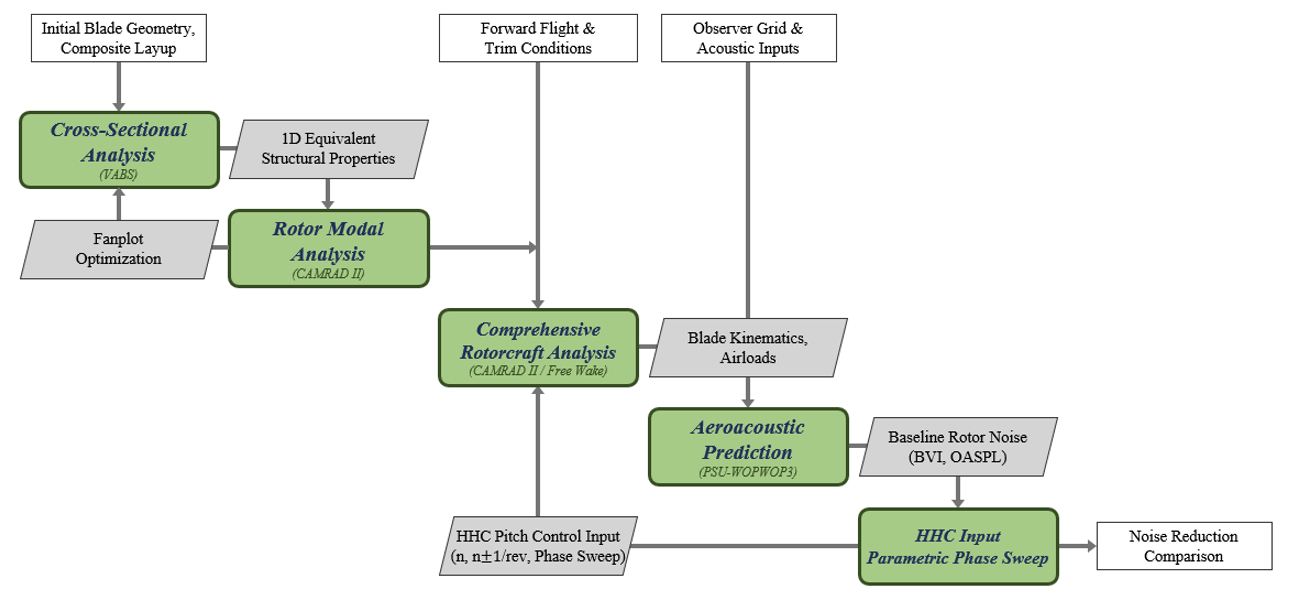
Figure 1. Diagram showing how VABS fits into the SNU workflow. Image provided by SNU.
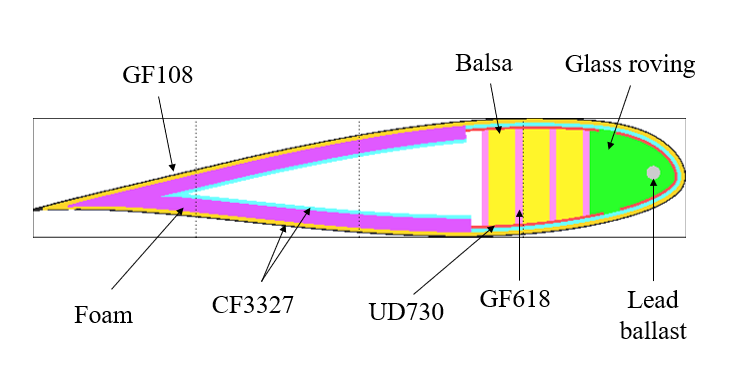
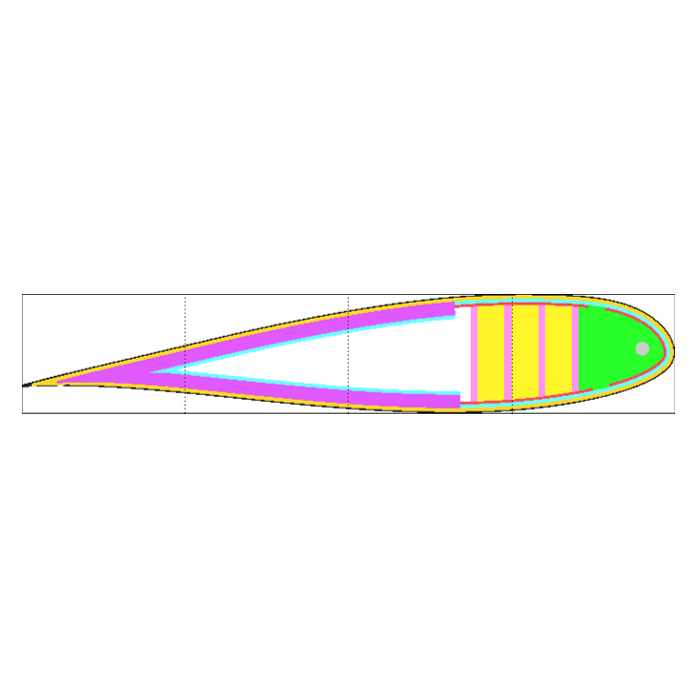
Figure 2. Cross-sectional design variables and material composition of the composite rotor blade. Image provided by SNU.
Also important is the ongoing and future work at SNU. According to Sangkyung Kim, Masters student, “We intend to use VABS to obtain the sectional stiffness, mass, and inertial properties of composite rotor blade cross-sections, and to perform stress and strain recovery for composite failure evaluation. The resulting beam-equivalent properties will be used in blade-level dynamic analysis, and the cross-sectional design will be iteratively updated until both composite failure and resonance-avoidance constraints are met.”
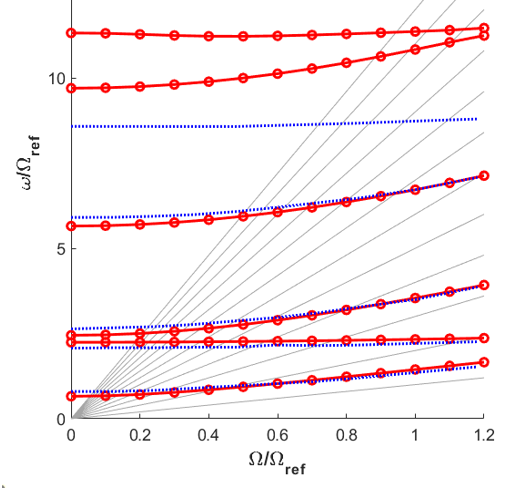
Figure 3. Fan plot showing the blade natural frequencies versus rotor speed for resonance-avoidance verification. Image provided by SNU.
SNU has two current research areas and projects involving VABS: structural design using dimensionless parameters for the Mach-scaled X2TD rigid coaxial compound rotorcraft blade, and design and assessment of a 3D composite propeller blade through cross-sectional modeling and analysis.
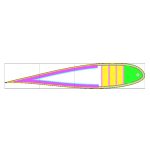
Figure 4. Finalized cross-sectional layout of the composite blade obtained from the VABS-based iterative design. Image provided by SNU.
“The VABS program is a uniquely powerful tool for modeling composite blades, high aspect ratio wings, and other slender structures, commonly called beams,” said Dr. Wenbin Yu, CTO of AnalySwift. “VABS reduces analysis time from hours to seconds by quickly and easily achieving the accuracy of detailed 3D finite element analysis (FEA) with the efficiency of simple engineering models. With VABS, engineers can calculate the most accurate, complete set of sectional properties such as torsional stiffness, shear stiffness, shear center for composite beams made with arbitrary cross-section and arbitrary material. It can also predict accurate detailed stress distribution for composite beams, which are usually not possible with 3D FEA for realistic composite structures.”
The full press release is also available here.
About AnalySwift
AnalySwift, LLC is a provider of efficient yet accurate simulation software for composites and other advanced materials (metamaterials, architected materials, porous materials, tailorable composites, etc.) Drawing on cutting-edge technology, AnalySwift’s powerful solutions provide customers a competitive advantage through reductions in engineering time, virtual testing, and handling of more complex composite structures. The company’s technologies deliver the accuracy of detailed 3D FEA at the efficiency of simple engineering models, typically cutting analysis time by orders of magnitude.
Media Contact: Allan Wood, (801)-599-5879, in**@********ft.com, www.analyswift.com